


Managing a workplace retirement account is rarely a one-minute task. You may begin with a question about a contribution, open enrollment, an investment choice, or a recent transaction, then move between an employer’s benefits process and your account provider before you finally know what needs to happen. NetBenefits - Fidelity is designed for that part of the journey. In my experience, it is most useful when I already know which workplace benefit I need to check and want a focused way to review it from my phone.
This is a free finance app from Fidelity Investments, with an Everyone age rating. It has been available since April 24, 2013, and the current version is 4.35.2 for devices running iOS 12 or later. Its store summary is brief, but the practical idea is clear: it puts access to Fidelity workplace accounts in a mobile format rather than making me depend entirely on a desktop browser or a benefits office.
From a workplace question to a useful answer
Starting with the right question
The best experience begins before I open the app. “I want to understand my retirement plan” is too broad to make a quick mobile session satisfying. “I want to check whether my latest contribution arrived,” “I need to review my current investment allocation,” or “I want to find information before speaking with human resources” gives the app a clear job.
That distinction matters because NetBenefits - Fidelity is not a general-purpose budgeting app. It is not where I would expect to combine every bank account, categorize household spending, or build a complete monthly budget. Its role is narrower and more practical: helping me reach workplace account information connected with Fidelity.
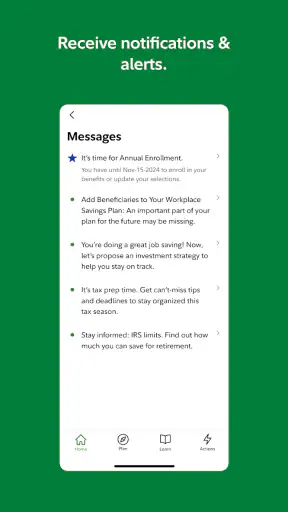
When I use it with a specific purpose, the mobile format makes more sense. I can check an account during a commute, before a benefits conversation, or after receiving a workplace reminder. The app becomes a quick checkpoint in a larger process rather than an attempt to replace every financial tool I use.
Signing in and finding the relevant account
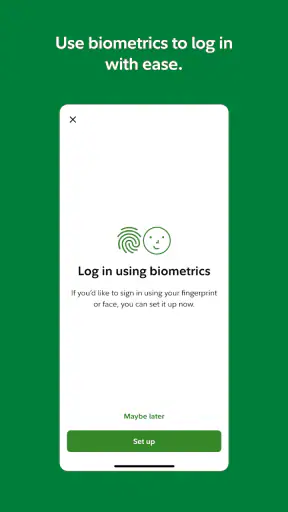
The first handoff is between me and the account itself. I need to identify the correct workplace relationship and sign in carefully, especially if I have more than one employer-related account or have used Fidelity services before. A small amount of preparation helps: I keep the question I am trying to answer in mind and avoid opening the app simply to browse without a goal.
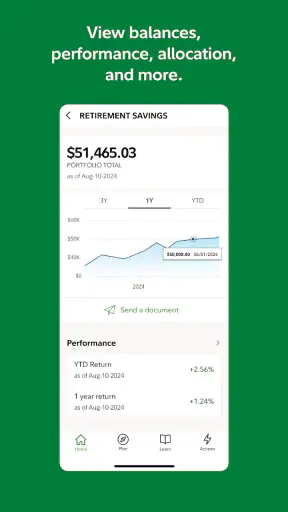
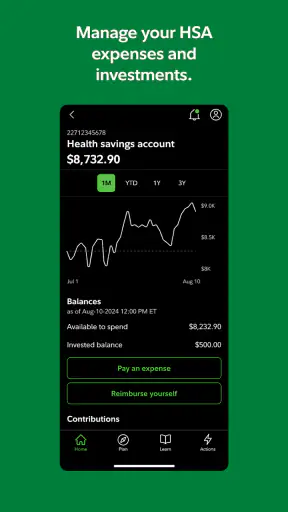
Once inside, I look for the account or benefit that matches that question. The value here is not just having a balance on a screen. The important step is connecting the displayed information with the decision I need to make. A contribution check, for example, is different from an investment review; one is about whether money arrived, while the other is about how the account is positioned.
This is one of the less obvious strengths of a dedicated workplace account app. A normal banking app may show cash movement clearly, but it usually does not present the same employer-plan context. A broad investment app can offer research and trading tools, yet it may not be the right place to understand the workplace account that payroll feeds. NetBenefits sits closer to the benefits workflow.
Reviewing information without rushing to a decision
My advice is to treat the first screen as an orientation point, not as a command to act. A changing balance can reflect market movement, contributions, withdrawals, or other account activity. Looking at one number and immediately deciding that the plan is performing well or badly is an easy mistake.
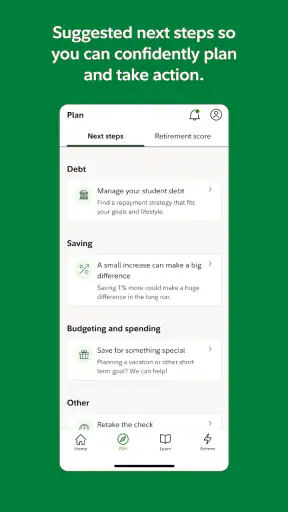
I prefer a three-pass routine. First, I identify the account. Second, I check the relevant activity or contribution context. Third, I decide whether the answer is enough or whether I need a document, an employer contact, or a deeper review elsewhere. This keeps a quick mobile check from turning into an uninformed financial decision.
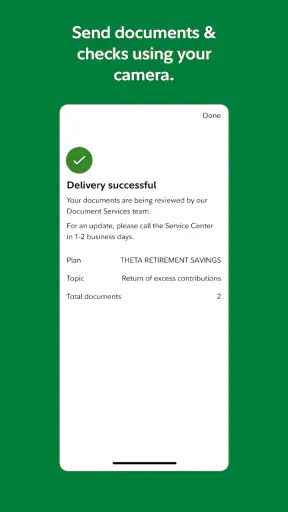
A useful habit is to make a short note of what I saw and when I saw it, particularly if I am comparing it with a pay statement or preparing a question for benefits support. The app can be the observation point, while the pay statement and employer materials remain separate pieces of evidence. That separation prevents me from treating a mobile snapshot as the entire record.
Following the handoffs
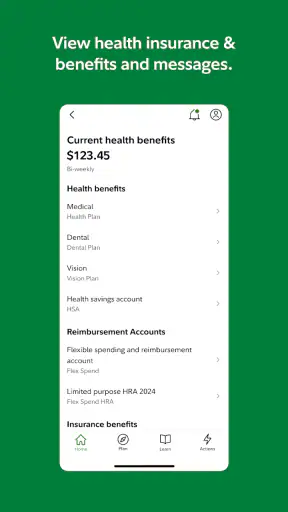
Workplace benefits involve several parties, and the app cannot erase those boundaries. Payroll determines what is sent from a paycheck. The employer defines the plan framework and enrollment process. Fidelity provides the account interface and related servicing. I am the person who has to connect those pieces and notice when something does not line up.
That is why a missing or unexpected amount should not automatically be treated as an app problem. I would compare the account view with the relevant pay information first, then contact the appropriate workplace or Fidelity support channel depending on where the discrepancy appears. The app helps me locate the question, but it does not replace the people or systems responsible for answering every part of it.
This handoff is especially important for new employees. If an account looks empty shortly after enrollment, I would not assume the enrollment failed or that the app is broken. Timing between an election, payroll processing, and account activity can matter. I would use the app to check the account, then verify the payroll and employer side before changing anything.
Using the result in everyday life
Imagine I am preparing for a conversation with human resources about my workplace retirement plan. Instead of asking a vague question, I open the app, identify the account, review the recent information available to me, and write down the exact point that remains unclear. I then bring that focused question to the benefits team. The outcome is better than simply saying, “My retirement account looks wrong,” because I have already separated what I can observe from what needs explanation.
Another realistic use is a regular personal check after a pay change. I can compare the contribution information I expect with what appears in the account, then decide whether the change is consistent with my election or deserves follow-up. I would not do this as a daily ritual. A short, purposeful review is more useful than repeatedly watching a long-term account balance move.
For someone changing jobs, the app may also serve as a reference point while several decisions compete for attention. I can use it to understand which workplace account I am looking at before researching choices such as leaving assets in place or considering another destination. The key benefit is clarity at the starting line, not a promise that the app will make the decision for me.
Where the mobile flow breaks
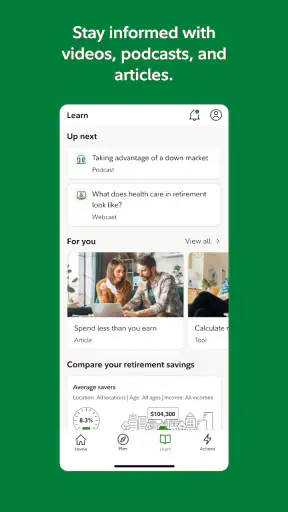
The same focus that makes NetBenefits useful can make it feel limited. If I want a complete view of my household finances, I need another tool. If I am looking for broad educational material, advanced investment analysis, or a highly detailed planning workspace, a desktop experience or a specialized service may be more comfortable. A phone screen is convenient, but it is not automatically the best environment for every financial task.
There is also a mental friction that comes with workplace accounts: the app may show me information, but I still need to understand plan rules, payroll timing, tax treatment, and employer-specific details. A clean mobile interface cannot simplify a complicated benefit into a single universally correct action. I would be cautious about changing contributions or investments merely because a quick glance made me uncomfortable.
Another limitation is the handoff itself. When the answer depends on payroll or an employer’s plan administration, I may have to leave the app and continue the conversation elsewhere. That is not necessarily a defect, but it does mean the experience is not completely self-contained. People expecting one app to resolve every workplace-benefit question may find the process slower than they hoped.
How it compares with the usual alternatives
Compared with a mobile browser, a dedicated app feels more natural for repeated account checks. I do not have to begin with a general web search or navigate through unrelated pages. For a task I perform occasionally but want to complete quickly, that reduction in friction is meaningful.
Compared with a general banking app, NetBenefits is better suited to the workplace-account context. A banking app may be stronger for spending, transfers, alerts, and household cash flow, while this app is more relevant when the question begins with an employer benefit. I would use both rather than trying to force one into the other’s role.
Compared with a full desktop benefits portal, the mobile app is more convenient for short checks but less appealing for long research sessions. If I am comparing several documents, taking detailed notes, or trying to understand a complicated plan choice, I would rather use a larger screen and keep the app as a quick reference. The trade-off is simple: speed and portability versus room for context.
Who should use it, and who should skip it
I think it is a good fit for employees whose workplace accounts are handled through Fidelity and who want a direct mobile checkpoint. It is particularly useful for people who dislike waiting until they are at a computer to confirm account information, prepare a benefits question, or review a workplace-related financial detail.
It is less suitable as a first choice for someone who wants a complete personal-finance dashboard. It is also not the right answer for a person whose main need is everyday banking, expense tracking, or independent investment research. In those situations, the usual alternatives are likely to provide a broader set of tools.
New investors should also keep expectations realistic. Access is not the same as understanding. I would use the app to gather account information, then read the applicable plan material or ask a qualified support contact when the decision involves rules I do not understand. That approach is slower than tapping through a screen, but safer than guessing.
What the adoption figures suggest
The app has passed one million installs, and its average rating is 4.0 from around twenty-five thousand ratings, with about 7.8 thousand written reviews. I read those figures as a sign of a practical, established tool rather than a universally loved financial companion. The rating feels consistent with an app that solves a specific problem well for the right audience while frustrating people who expect a broader or more polished all-in-one experience.
The free price also lowers the barrier to trying it, although the real value depends on whether my workplace account belongs in the Fidelity ecosystem. The Everyone rating makes it broadly accessible from an age-label perspective, but the usefulness is still determined by the account relationship and the task I need to complete.
My final workflow and verdict
My preferred workflow is straightforward: start with one concrete workplace-account question, sign in, identify the correct account, review the information relevant to that question, and write down anything that needs confirmation. Then I hand the unresolved part to payroll, human resources, or Fidelity support instead of expecting the app to settle an issue outside its role.
The result is a useful mobile checkpoint, not a complete financial command center. Its strongest quality is focused access to workplace-account information when I need it away from a computer. Its main weakness is that the most important answers may still depend on employer processes, plan documents, or conversations outside the app.
I would recommend NetBenefits - Fidelity to a friend who has a Fidelity workplace account and wants a convenient way to stay oriented. I would not recommend treating it as a replacement for budgeting software, a full planning service, or careful benefits guidance. Used with that boundary in mind, it earns its place on my phone: it helps me move from uncertainty to a better question, and from that question to the right next person or decision.
For me, that is the honest outcome. The app does not remove every step in workplace financial management, but it makes the first step easier to take and the handoffs easier to understand.


